Approved requirements returned
Airtable revision 3, the Slack approval request and the successful n8n execution matched the shared work record.

Storefront operations · Connected apps
See a mobile shopping improvement move from an Airtable brief through approval and automation, with GitHub, Shopify and Intelligems records brought into the same workspace.
The working integrations
Watch the strategist, account lead and developer hand off one mobile store improvement. See the actual source apps beside the shared workspace.
Recorded app screens from 7 October 2026, with handoff records from 6–7 October. Account details are redacted. Owned sandbox accounts; this is recorded evidence, not a live connection check.
See what was verified ↓A shopper scrolls down a product page and loses sight of Add to cart. The team wants to keep that action within reach. These are recorded screens from the connected apps. Follow the improvement into one shared workspace.
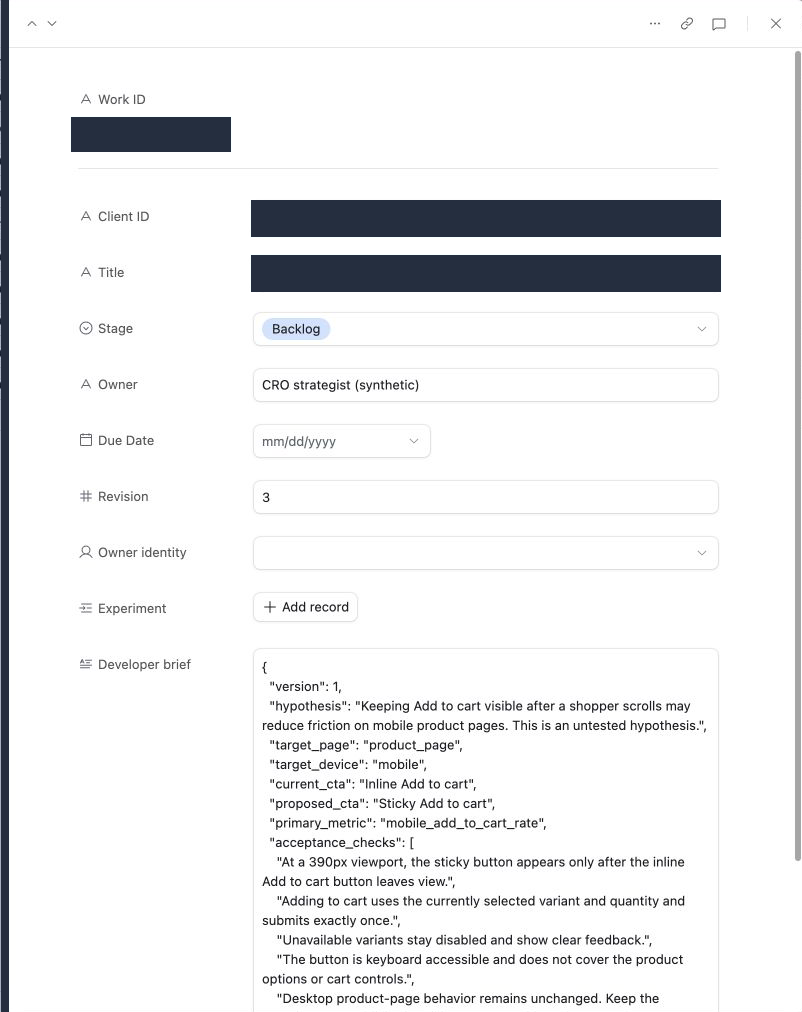
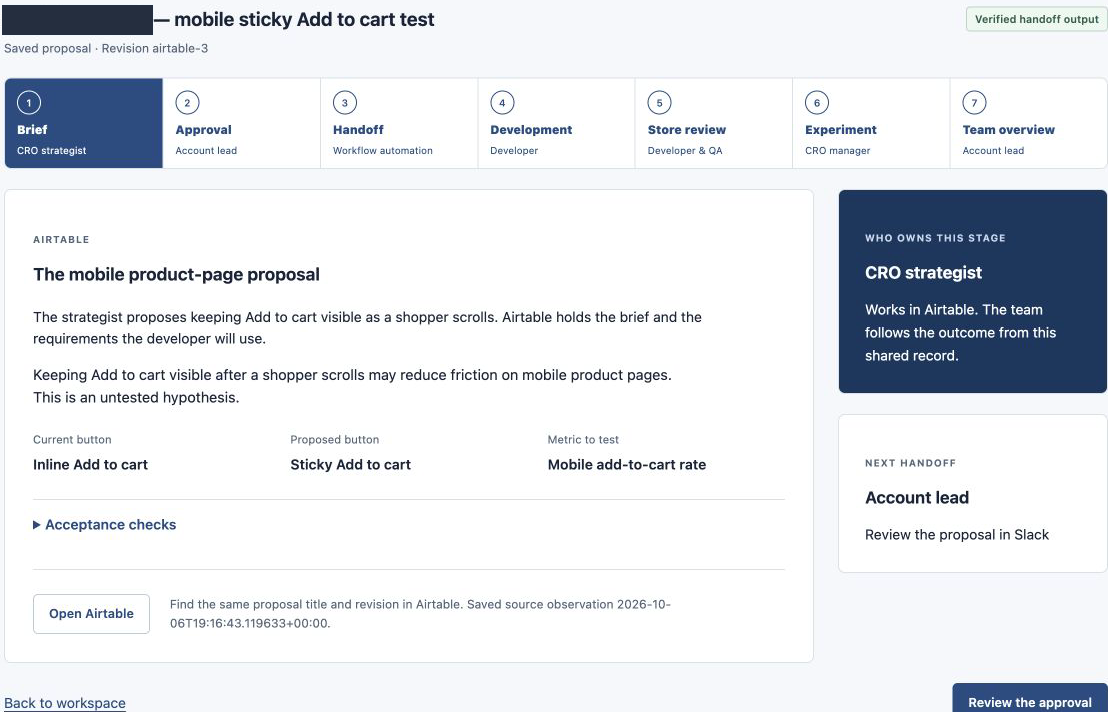
The strategist kept the requirements in Airtable: a mobile button, the selected product variant, and clear checks for the developer. The integration imported that brief. In the workspace, revision three carried those same requirements.
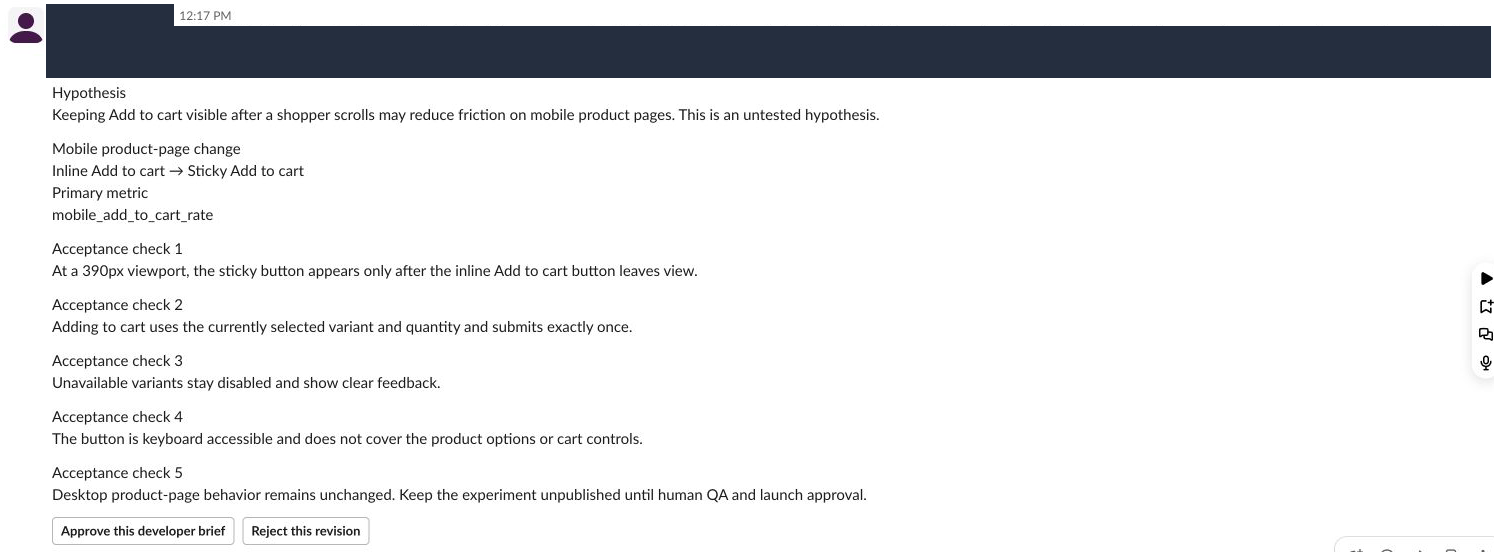
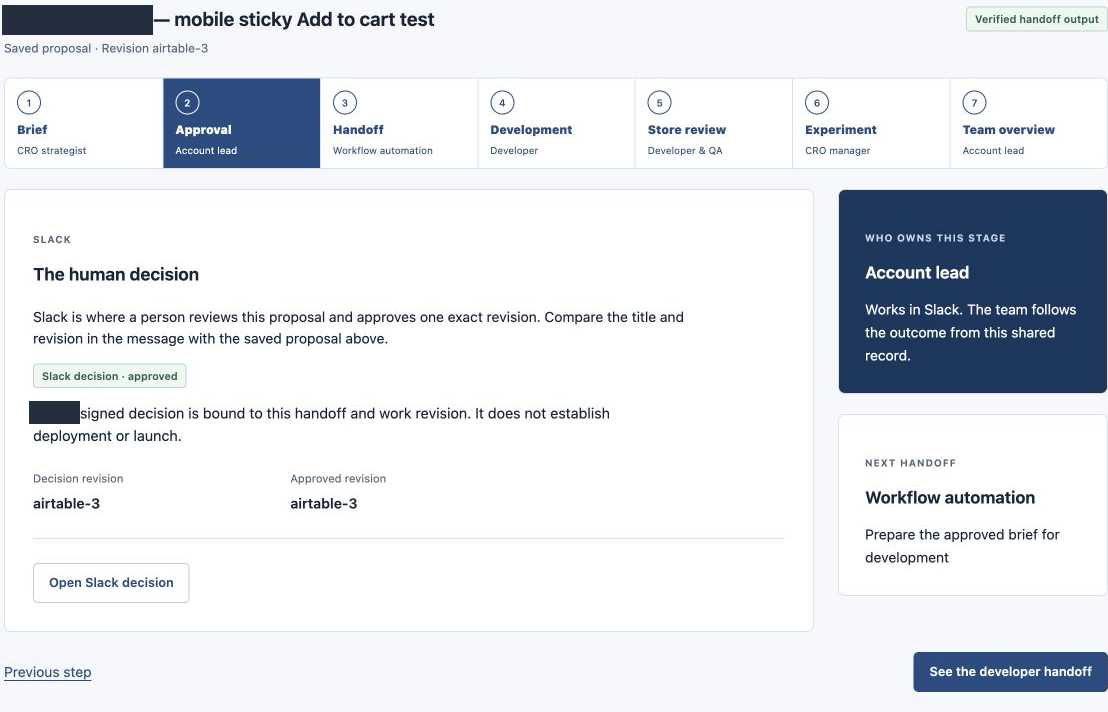
The account lead received the approval request in Slack. The workspace retained the decision against that revision. That gave the next person an approved brief to work from, with a record of what the approval covered.
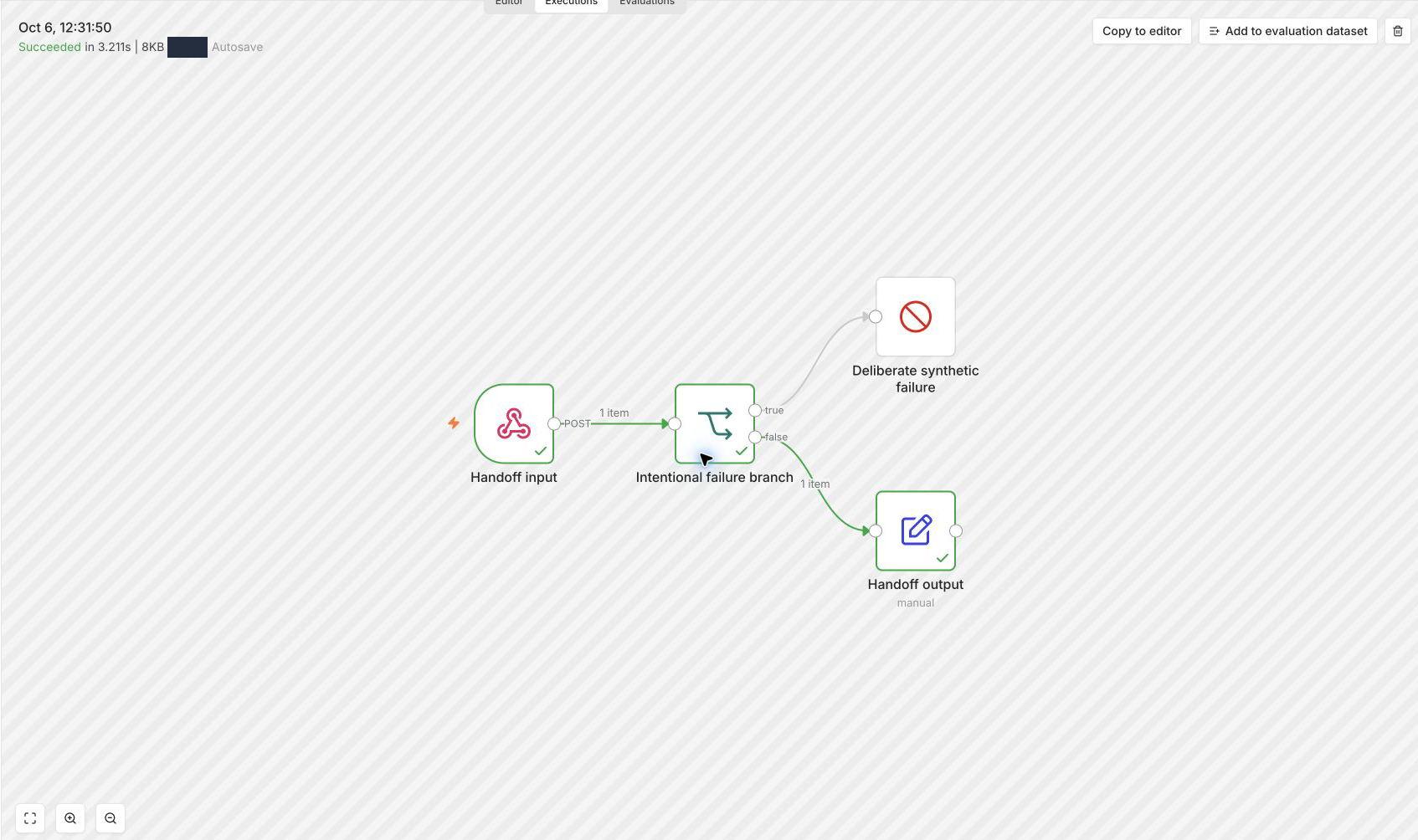
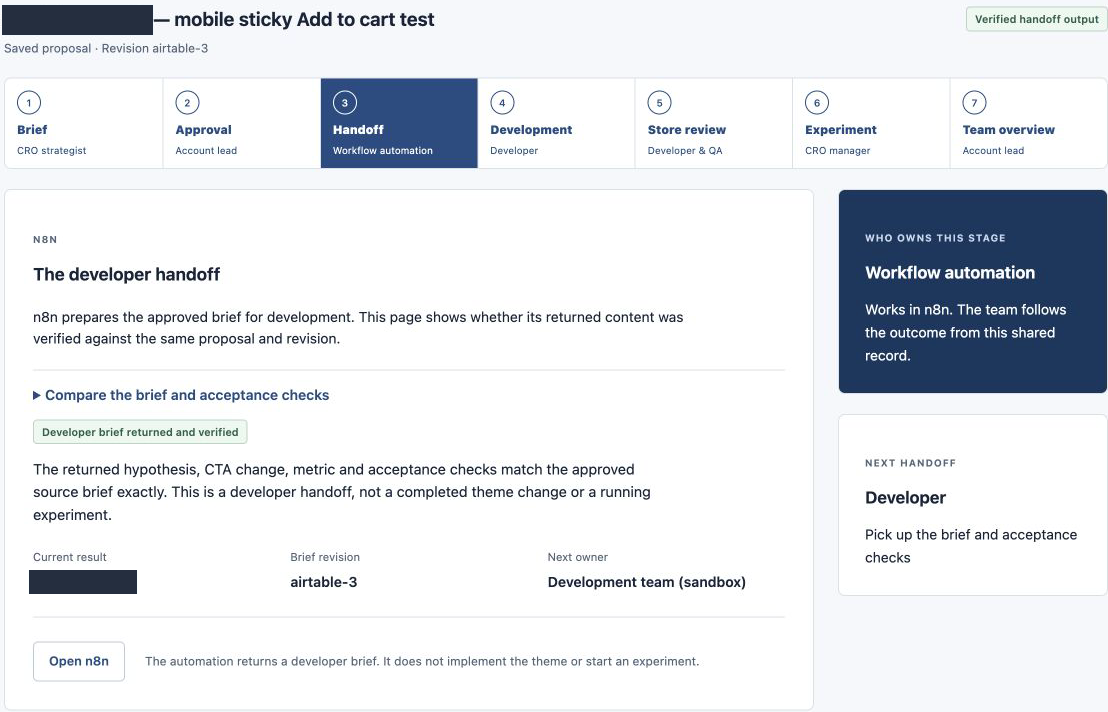
The approved brief went to n eight n. This execution completed successfully. The retained readback matched the job, the attempt, and the returned brief to the approved revision. The workspace recorded the result as verified.
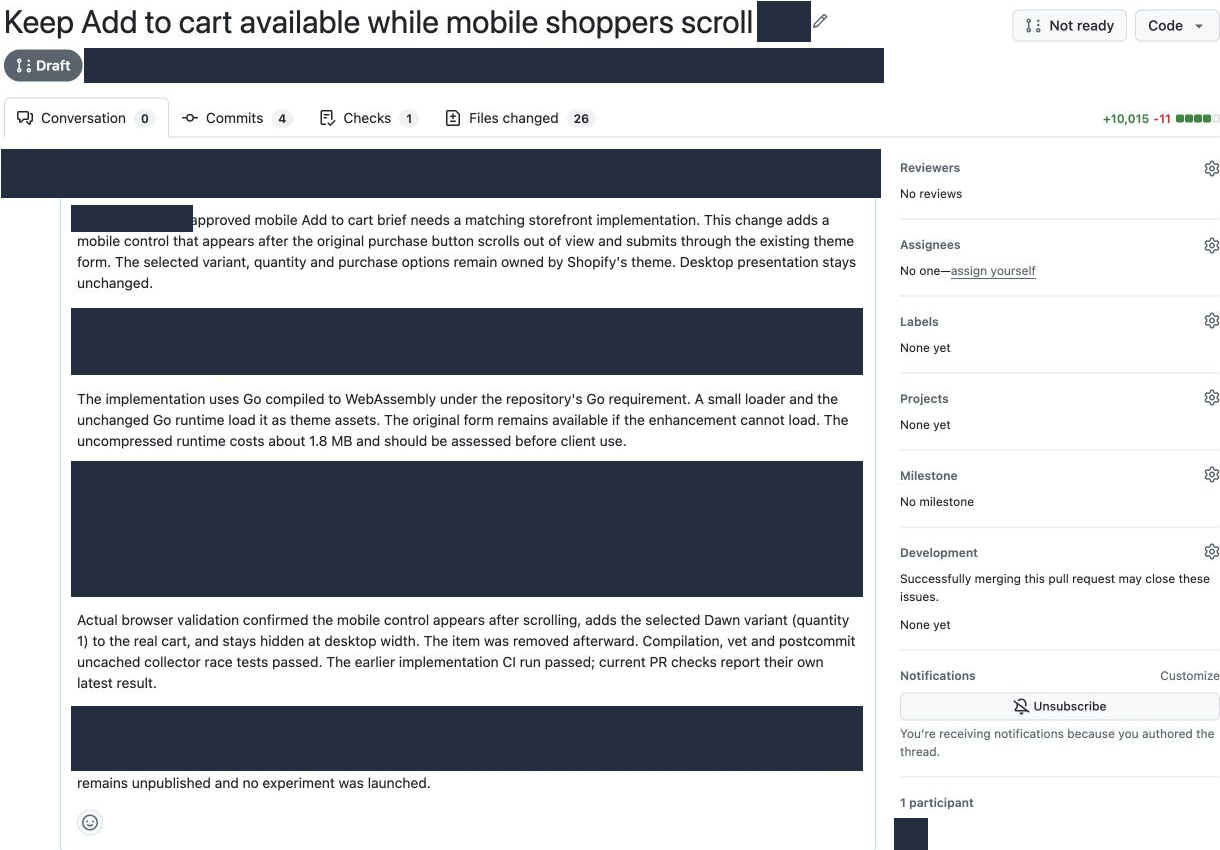
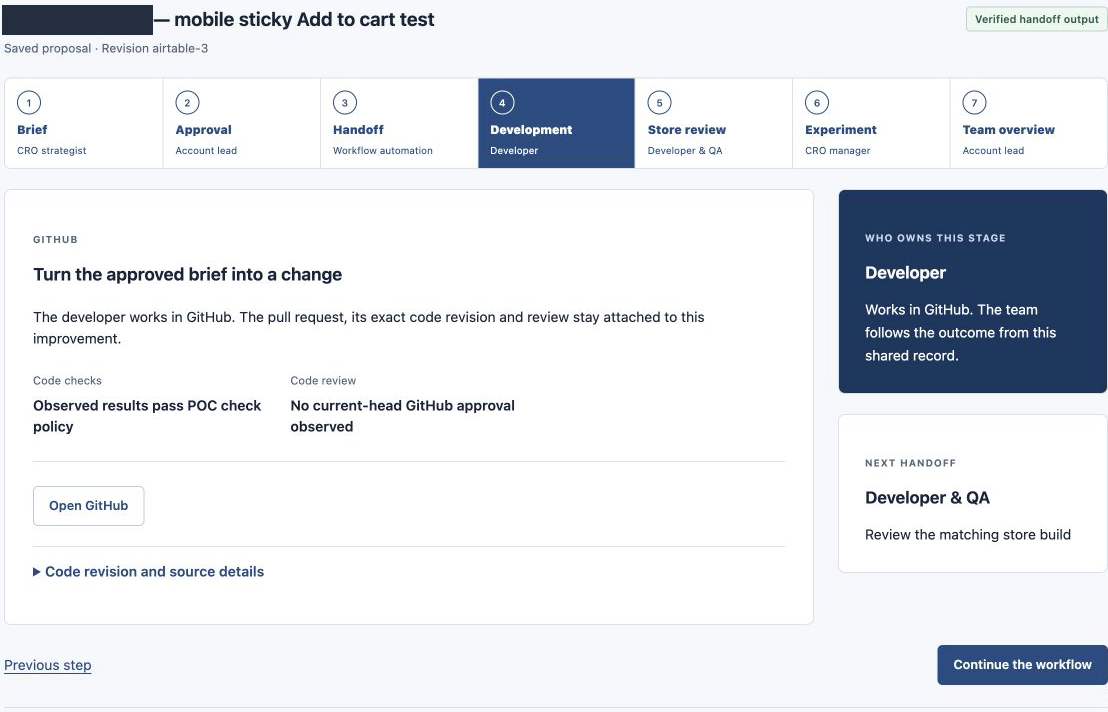
The developer's change lived in GitHub. The integration read the pull request and its checks into the workspace. The recorded build also matched the Shopify draft. Independent code review remained a separate step.
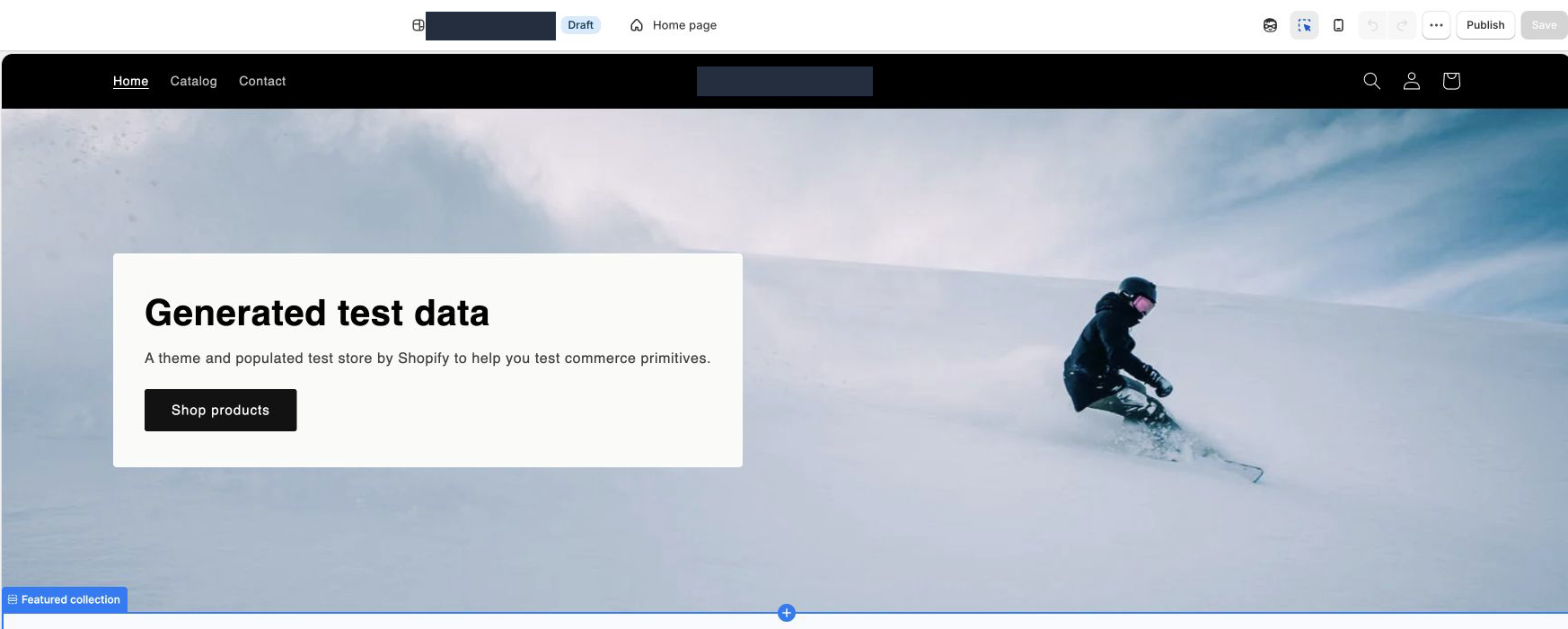
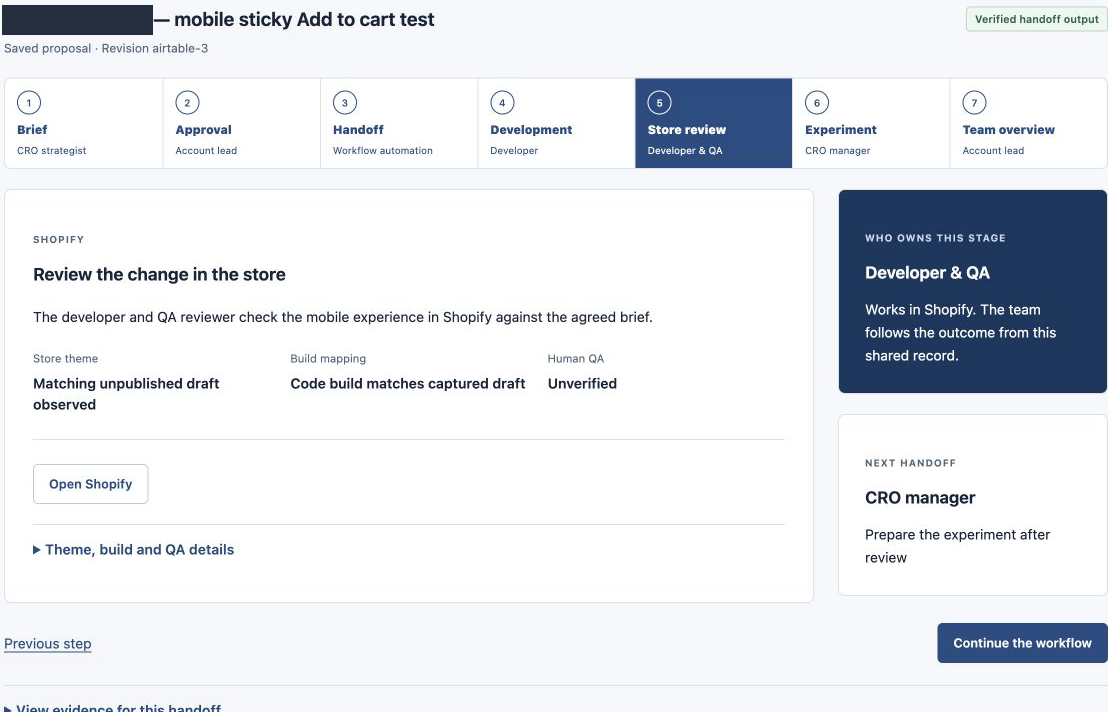
Here is the actual unpublished Shopify draft. These two mobile views show the product page before and after scrolling. The sticky Add to cart button appears lower down the page. The workspace linked that draft to the build being reviewed. Human quality review was still pending.
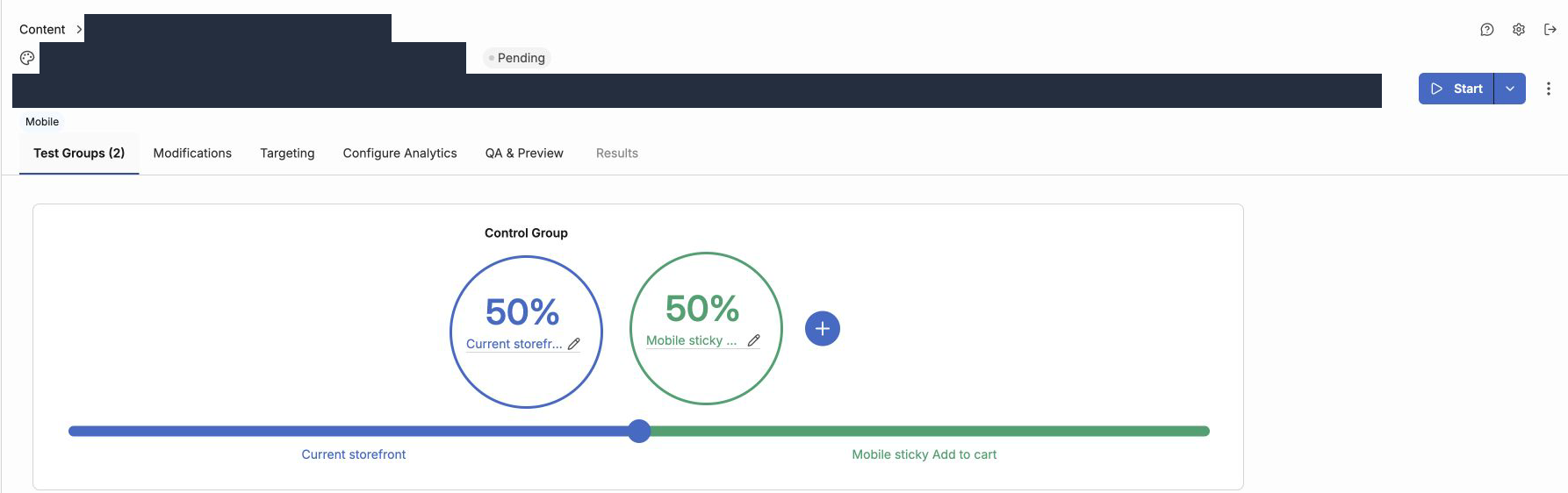
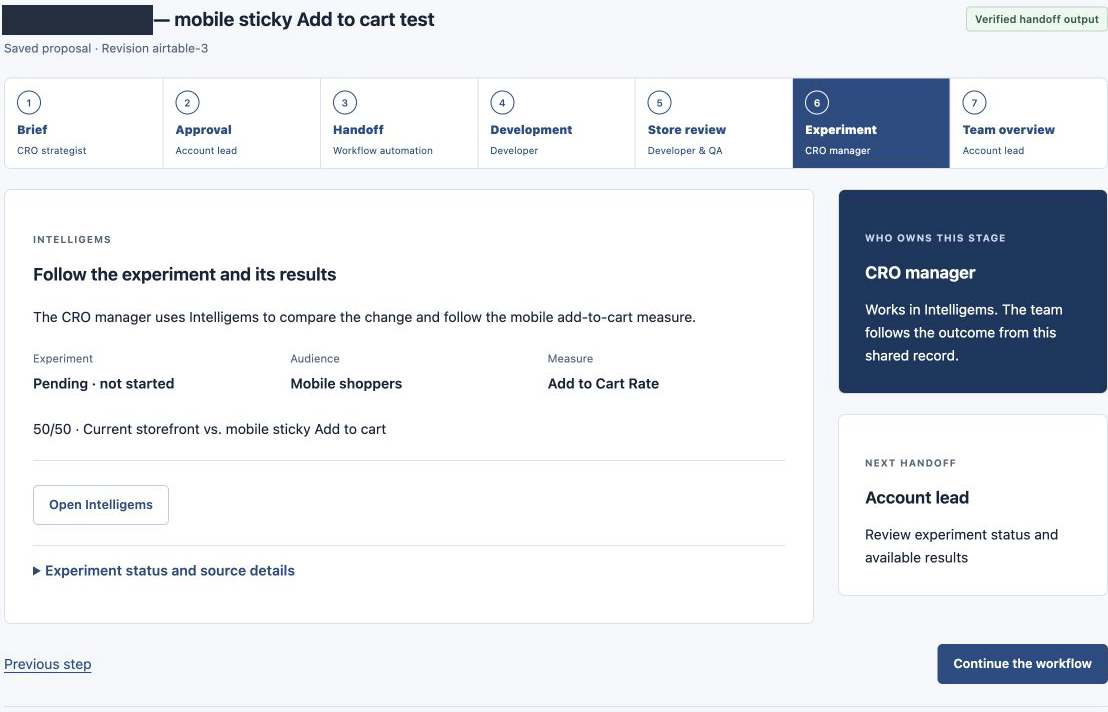
The saved Intelligems test compared the current store with that same draft. It targeted mobile shoppers, split traffic equally, and selected Add to Cart Rate as the measure. The integration read this configuration into the workspace. The test was pending, with no results yet.
The approved brief handoff ran through automation. The code, store draft, and experiment setup were created separately and read back by their integrations. Together, these records let the team follow one improvement across six apps, with its requirements, decisions, and next steps in one place.
What connects the records
The approved brief returned through n8n unchanged. The recorded GitHub build matched the Shopify draft, and that draft was the treatment saved in Intelligems.
Airtable revision 3, the Slack approval request and the successful n8n execution matched the shared work record.
The workspace linked the recorded GitHub build to the unpublished Shopify theme being reviewed.
Intelligems held a pending mobile comparison with a 50/50 split and Add to Cart Rate as its measure.
The strategist's requirements were imported as revision 3. The shared record retained the mobile button, selected variant and acceptance checks.
The delivered Slack request matched the job and revision in the handoff ledger. The workspace recorded which revision the account lead approved.
The execution completed in 3.211 seconds. Its job, attempt, execution and output matched the retained ledger. The approved and returned brief contents had the same SHA-256 digest.
The integration imported the pull request, recorded build and code-check status. The implementation was created separately. Independent code review remained pending.
The captured theme matched the recorded build. The native mobile previews show the button's visibility before and after scrolling. Human QA remained unverified; these images alone do not prove cart submission.
The manually saved test targeted mobile shoppers and split traffic 50/50. Its treatment theme matched the Shopify draft. The test was pending; there was no launch or measured conversion result.
Captures and retained readbacks establish the recorded state. The brief handoff completed through automation; code, theme and test setup were created separately and read by their integrations. Read the redacted evidence summary.
Try each role's next step. This separate sample lets you learn the sequence without changing the connected accounts.
Interactive demo. Fictional data and sample app views. Your actions affect only this run.
Reset demoWhat happens next
Brief ready to saveSave the brief to begin.
The strategist keeps the brief in Airtable. The account lead decides in Slack. n8n carries the approved requirements to development, while GitHub, Shopify and Intelligems contribute their own work and review status.
The shared record keeps the proposal and revision consistent across those steps. This public tour uses sample responses. Connecting a team's accounts requires its own access, configuration and verification.
Watch the handoffs
A narrated tour of the interactive demo above, with close-ups of each handoff. The data and app responses are fictional.
Follow the strategist's brief through approval, development, store review and experiment preparation.
A small store improvement can involve several people and six different tools. Here, Fieldwork Goods wants to keep Add to cart within reach as a shopper scrolls a mobile product page. This record shows the proposal, who owns the next step, and what each app contributes.
The strategist starts in Airtable. The brief explains what should change and what must stay the same. The mobile button should add the selected product variant, and the desktop experience should stay unchanged. Saving the brief gives this work one ID, WEB-104.
The account lead reviews that revision in Slack. When the decision is recorded, the shared record moves to the developer handoff. The approved revision stays attached to the work.
n8n prepares the developer brief from those approved requirements. The developer receives the same work ID and acceptance checks, without copying the proposal between tools.
GitHub contributes the implementation and its review. Once that review is recorded, the next owner is the person checking the store draft. Everyone can see which proposal the change belongs to.
The QA reviewer checks the Shopify draft against the brief. Does the mobile button stay within reach? Does it add the selected variant? The result comes back to the same work record.
The CRO manager prepares the comparison in Intelligems. Mobile shoppers would be split between the current page and the reviewed draft, with add-to-cart rate as the measure. The experiment is prepared. Launch is a separate decision, and there are no results yet.
The account lead can now follow the brief, approval, developer handoff, code review, store check and experiment plan from one place. Open any app view to see the same work ID and revision. The team keeps its familiar tools and has one shared record of what happened and who acts next.
Bring the brief, the tools your team uses, and the handoff you want to fix.
Describe your workflow